
Stars & constellations, 2 minute read
Finding the Southern Cross
Use Crux and its two bright Pointer stars to find your way around the southern sky, and to find due south without a compass.
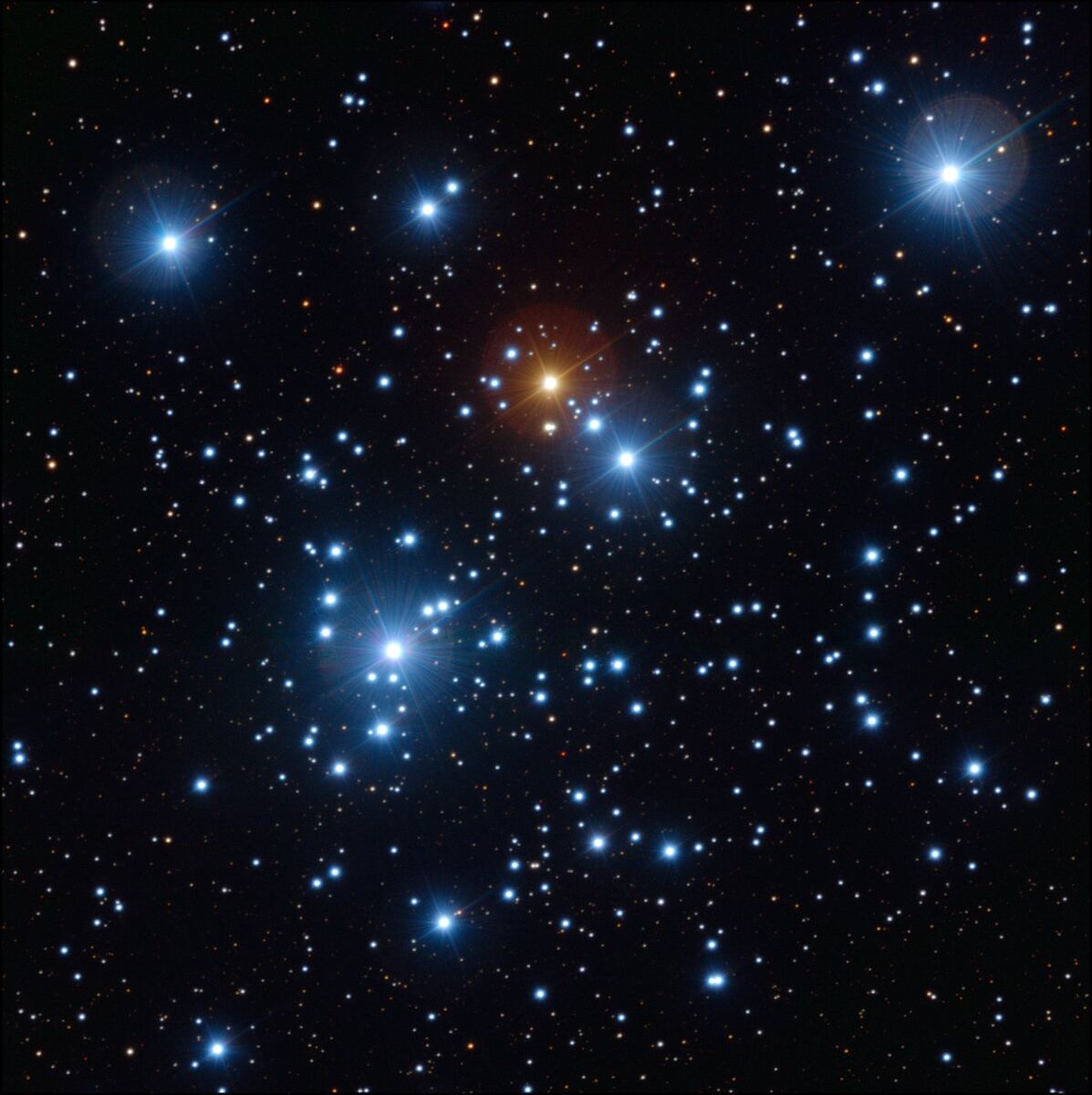
Crux, the Southern Cross, is the smallest of the 88 constellations recognised by the International Astronomical Union, yet it is one of the best-known star patterns on Earth. From Zimbabwe it is best seen in the evening from about March to July, standing high in the south. Later in the year it sits low in the south-west after dark, and in the summer months it is best seen before dawn.
Spotting the cross
Look for four bright stars in a kite shape:
- Acrux marks the foot of the cross and is the brightest.
- Gacrux, at the top, has a clear orange-red colour.
- Mimosa and Imai form the cross-bar. The name Imai comes from the Mursi people of Ethiopia, who use these stars to tell when the Omo River will flood. The IAU adopted it as the official name of Delta Crucis in 2018.
Do not be fooled by the False Cross, a larger, fainter kite of stars in the nearby constellations Carina and Vela.
The Pointers
Two very bright stars, Alpha Centauri and Beta Centauri, point towards the cross and confirm you have the real one. Alpha Centauri is the nearest star system visible to the naked eye, about 4.4 light-years away. The Venda see Crux and the Pointers as Thuda, giraffes: the two bright stars of the cross are males and the two Pointers are females.
Two treasures nearby
- The Coalsack is a dark patch beside the cross: a cloud of dust that blocks the light of the stars behind it.
- The Jewel Box is a sparkling star cluster right next to Mimosa. Binoculars show it well.
Finding due south
There is no bright "South Star". Instead:
- Extend the long axis of the cross, from Gacrux through Acrux, about four and a half times its own length.
- Draw a line at right angles from the midpoint between the two Pointers.
- Where the two lines meet is close to the south celestial pole. Drop straight down to the horizon to find due south.
The south celestial pole is always as high above your southern horizon as your latitude is south of the equator: about 16 degrees in Kariba and about 22 degrees in Beitbridge.
Sources
Part of the course Astronomy Foundations.