
Stars & constellations, 2 minute read
The Night Sky Through the Year
Why the evening stars change with the seasons, what to look for in summer and winter from Zimbabwe, and how people across southern Africa used the stars as a calendar.
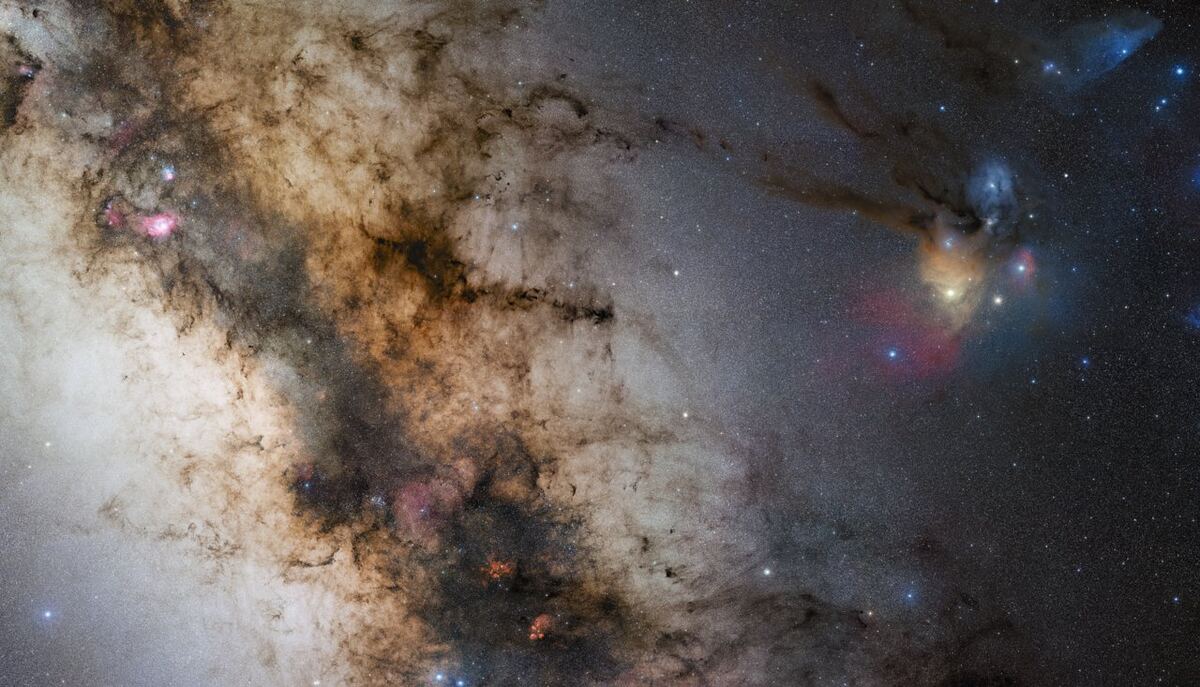
As Earth orbits the Sun, the night side of our planet faces a different direction in space. That is why the evening constellations change through the year. Each star rises about four minutes earlier every night, which adds up to about two hours a month.
Why there are seasons
Earth's axis is tilted by about 23.4 degrees. For half the year the Southern Hemisphere leans towards the Sun: the Sun climbs higher, days are longer, and it is summer. Seasons are not caused by changing distance from the Sun: Earth is actually closest to the Sun in early January.
All of Zimbabwe lies between the equator and the Tropic of Capricorn, so the Sun passes directly overhead twice a year, once on its way south in late spring and again on its way back north in mid-summer.
Summer evenings (December to February)
- Orion is high in the north. From the Southern Hemisphere it appears "upside down" compared with pictures in many books. Its belt of three stars is easy to find.
- Sirius, the brightest star in the night sky, is close to Orion.
- Canopus, the second-brightest star, is high in the south.
- The Pleiades, a small, tight cluster of stars, is in the north, sinking towards the north-west by February.
Winter evenings (June to August)
- Scorpius, with its curling tail and the red star Antares, climbs high overhead.
- The bright centre of the Milky Way in Sagittarius is overhead in the darkest part of the year: the best time for Milky Way photography.
- The Southern Cross and the Pointers are high in the south-west after dark.
The stars as a calendar
Across southern Africa, the first appearance of certain stars before dawn marked the seasons:
- The first morning sighting of the Pleiades in late August or early September marked the planting season for many communities.
- For the Venda, the first person to see Canopus before dawn in May, heralding winter, climbed a hill, blew a horn and was given a cow.
- For the Tswana, Canopus rising before dawn signalled the time for breeding sheep.
Sources
Part of the course Observing from Zimbabwe.