
Research skills, 3 minute read
How Astronomers Do Research
From a question about the sky to a published result: the scientific method as astronomers use it, how to read a research paper, and how to spot a weak claim.
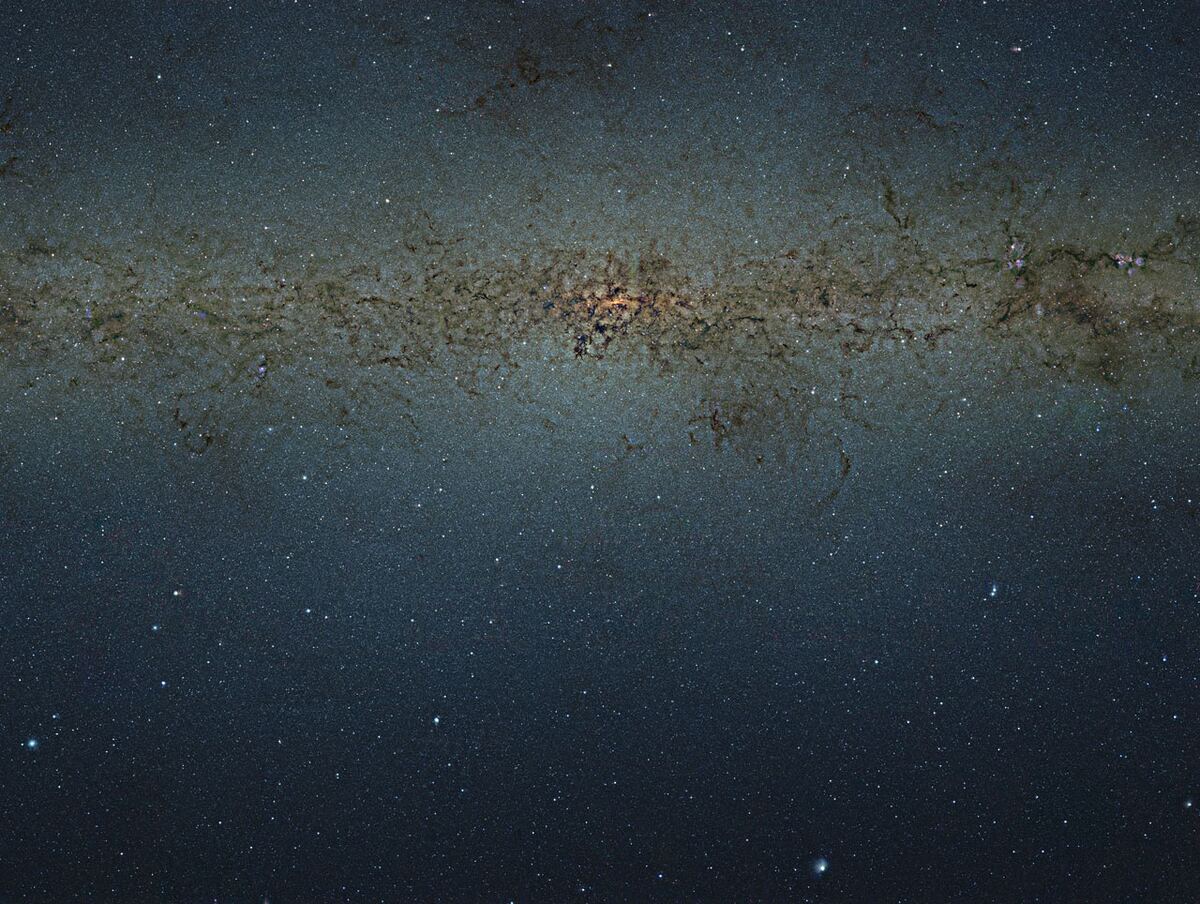
Astronomers cannot visit most of what they study, or repeat a supernova in a laboratory. Instead they collect light and other signals and use physics to work out what is happening. Their research follows the same basic logic as all science.
The research cycle
- Ask a question. For example: why does this star dim every few days?
- Find out what is already known. Read earlier work, so you build on it rather than repeat it.
- Form a hypothesis: a possible explanation that can be tested, such as "a planet passes in front of the star".
- Make a prediction. If the hypothesis is right, the dimming should repeat at exactly regular intervals, and always last the same time.
- Collect data. Observe with telescopes, or use public archives.
- Analyse. Measure carefully, estimate the uncertainty, and test whether the data agree with the prediction.
- Share and review. Publish the results so others can check them.
A good hypothesis must be able to fail. If no possible observation could ever prove it wrong, it is not science.
A famous prediction
In the 1840s, the planet Uranus was drifting from its predicted path. Urbain Le Verrier proposed that the pull of an unseen planet was responsible and calculated where it should be. In 1846 astronomers in Berlin pointed a telescope at that spot and found Neptune within one degree of the prediction. A testable prediction, confirmed by observation, is science at its best.
Peer review and preprints
Before a result appears in a journal, independent experts peer review it, looking for mistakes in the method and reasoning. Most astronomers also post their papers on arXiv, a free archive, and the NASA Astrophysics Data System (ADS) lets anyone search over a century of astronomy papers. Data from many telescopes and space missions becomes public after a set period, so a student in Zimbabwe with a laptop can analyse real data.
Reading a paper
Papers follow a standard order: abstract (a summary), introduction (the question and earlier work), data and methods (what was done), results, and discussion (what it means and its limits). Start with the abstract and the figures, then read the discussion. Do not worry if you do not follow every equation.
Uncertainty is part of the answer
Every measurement has an uncertainty. A good result says not just "the star is 100 light-years away" but "100 ± 5 light-years". When two careful measurements disagree by more than their uncertainties, astronomers know something interesting is going on.
Spotting a weak claim
Be cautious when a claim:
- comes from a single study that nobody has checked or repeated,
- gives no uncertainty, or no description of how it was measured,
- is reported only in headlines, with no link to the original research,
- is extraordinary. As the saying goes, extraordinary claims require extraordinary evidence.
Sources
Part of the course Astronomy Research Methods.