
Observing, 2 minute read
Light Pollution and Dark Skies
Outdoor lights are hiding the stars from more and more people. Learn what skyglow is, how astronomers rate a dark sky, who else is affected, and what you can do about it.
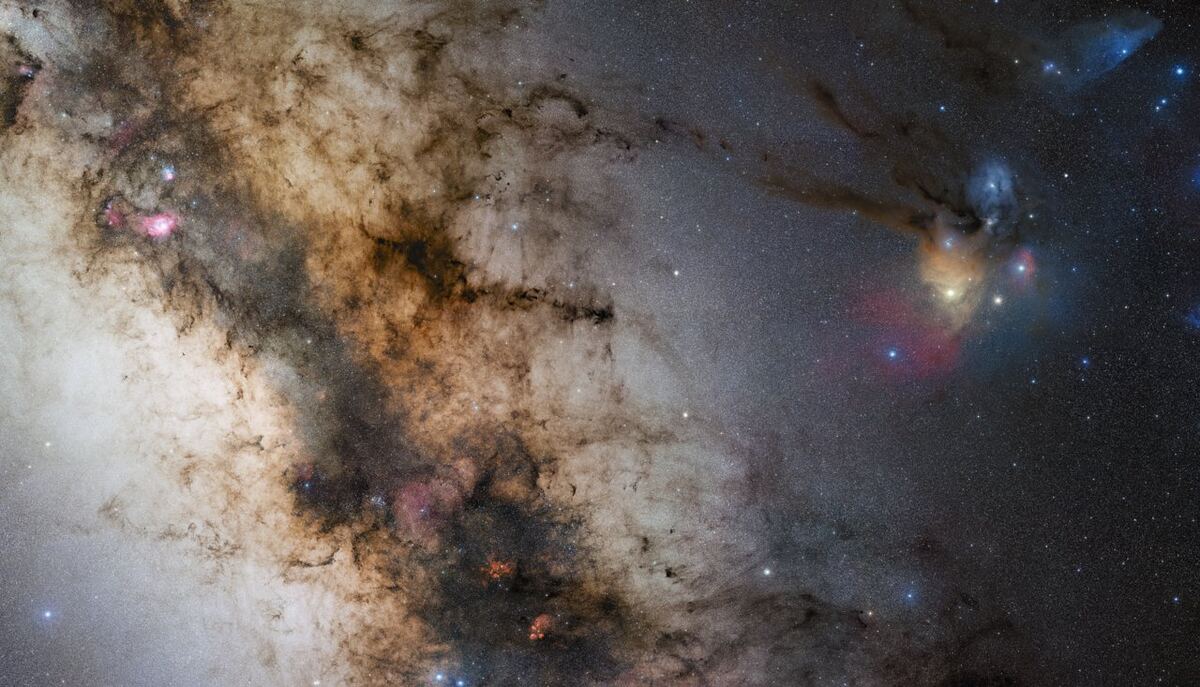
For most of human history, a clear night showed thousands of stars and the Milky Way. Today, in many places, artificial light has washed most of them away. This is light pollution.
What causes it
Lights that shine upwards or sideways, instead of down onto the ground, scatter off dust and air molecules and brighten the sky. This glow above a town is called skyglow. Even a small town can raise the brightness of the sky for many kilometres around it. A bright sky hides faint objects: you lose the Milky Way first, then dim stars.
A 2016 study in *Science Advances* mapped skyglow around the world. It found that more than 80% of the world's people, and more than 99% of people in the United States and Europe, live under a sky polluted by artificial light, and that the Milky Way cannot be seen from the homes of more than a third of humanity.
The Bortle scale
Astronomers describe how dark a site is with the Bortle scale, from 1 (the darkest sky on Earth, with the Milky Way casting faint shadows) to 9 (an inner-city sky where only the Moon, the planets and a few bright stars are visible). Big-city skies are usually Bortle 7 to 9.
Who else is affected
- Wildlife. Insects are drawn to lights and die around them. Birds can be thrown off course on migration, and baby sea turtles head for streetlights instead of the sea.
- People. Bright light at night can disturb sleep.
- Energy. Light that points at the sky does no good, and the electricity to make it is wasted.
What helps
- Shield lights so they shine only downwards, onto what needs lighting.
- Use only as much light as needed, and use timers or dimmers.
- Choose warm-coloured lamps instead of very bright, bluish-white ones.
- Switch off lights you are not using, especially around a school or clinic's grounds.
Groups such as DarkSky International teach people how to light responsibly.
Getting a darker sky for yourself
- Go away from towns and cities, ideally away from the glow on the horizon.
- Plan around the Moon: choose a night near new Moon (see our lesson Phases of the Moon).
- Give your eyes 20 to 30 minutes to adjust to the dark, and use a red light so you do not ruin your night vision. This app has a red night-vision mode.
Sources
- Falchi, F. and others (2016). The new world atlas of artificial night sky brightness. *Science Advances* 2(6).
- DarkSky International
- OpenStax Astronomy 2e, 6.2 Telescopes Today
Part of the course Space Technology and Dark Skies.