
Stars & constellations, 2 minute read
Star Lore of Zimbabwe and Southern Africa
Shona, Karanga, Ndebele and Venda names for the stars, the Milky Way and the Magellanic Clouds, what they meant, and why recording this knowledge is real research.
Long before telescopes, people in what is now Zimbabwe watched the sky closely and named what they saw. Much of this knowledge was passed on by word of mouth. The names below come from a 1995 survey of southern African star lore by the historian of science Keith Snedegar, as compiled by South Africa's Centre for Astronomical Heritage and the Astronomical Society of Southern Africa. Names and meanings varied between regions and families, so treat them as examples, not a complete list.
Everyday words
- In Shona a star is nyenyedzi (or nyeredzi), the Sun is zuva and the Moon is mwedzi.
- In Venda a star is maledzi and the Sun is duvha.
Orion's Belt and the Pleiades
- Shona speakers call the three stars of Orion's Belt Chimutatu, "the group of three". The Karanga see them as Nguruve, "the wild pigs", and the Tswana likewise as pigs being chased by three dogs.
- The Pleiades are Chimutanhatu, "the six", in Shona: about six stars stand out to the eye. Another name, Chinyamunomwe, means "the seven".
The Milky Way
The Karanga have several names for the Milky Way, each telling a story: Gwara renzou, "the elephant's track", the path of the hunter, and the track of the ancestor spirits. For the Venda it is Mulala-vhungu, "the line of heaven".
The Magellanic Clouds
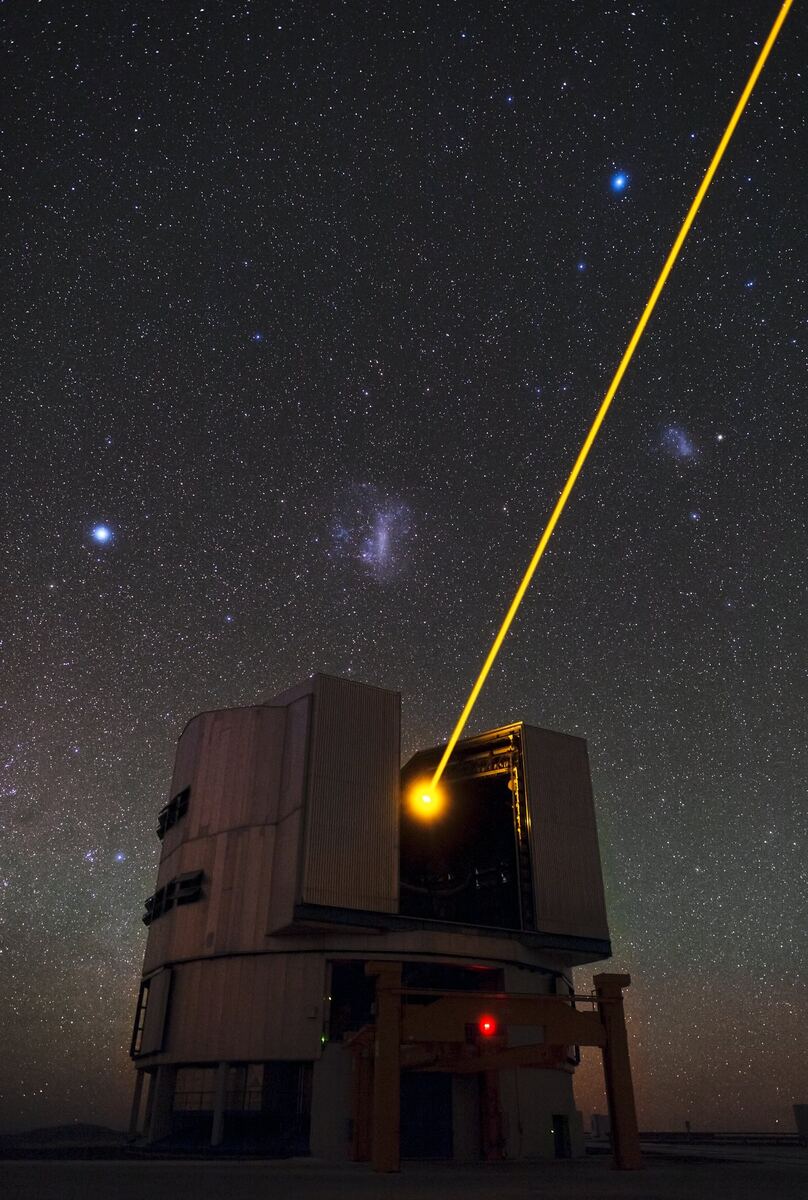
These two fuzzy patches near the south celestial pole are small galaxies that orbit our own. The Karanga called the Large Cloud Maguta, "plenty", and the Small Cloud Mazhara, "famine". If the Small Cloud looked brighter than the Large one, a drought was expected.
Venus, Canopus and Sirius
- In one Shona tradition, Venus is linked with Masase and Muronga, the two wives of the Moon.
- The Ndebele call the evening star Lykwela mkobe, "asking for mealies". In Venda it is Khumbela tshilalelo, "asking for supper": it appears as the evening meal is being prepared.
- The Ndebele and Venda call Canopus Naka, "the horn". The Venda call Sirius Khohamutsho, "pulling out the dawn".
- Ndemara, "the sweetheart star" in Shona, is probably Fomalhaut.
Why this matters
Indigenous astronomy is part of the history of science. These names record careful observation: the seasons, the timing of planting, the reliability of the rains. The International Astronomical Union now adopts names from cultures around the world, including African names such as Imai in the Southern Cross. If an elder in your family knows names or stories for the stars, writing them down, with their permission, is a valuable piece of research. Share what you learn with ZAS.
Sources
Part of the course Observing from Zimbabwe.