
Observing, 2 minute read
Seeing the Milky Way from Zimbabwe
The glowing band across a dark sky is our own galaxy seen from the inside. Learn what you are looking at, the best months and places to see it from Zimbabwe, and how to prepare your eyes.
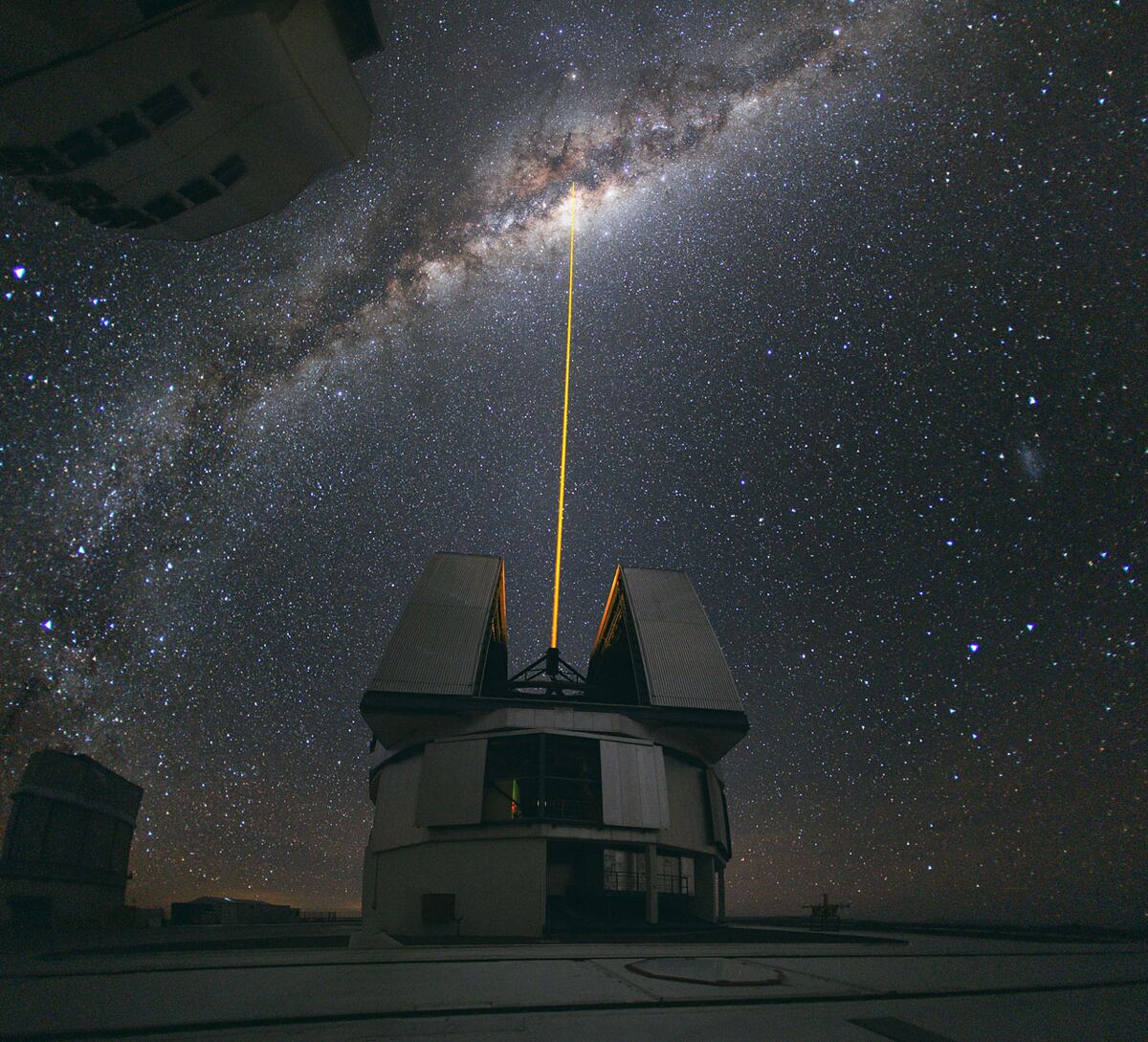
On a dark, moonless night away from town lights, a soft glowing band stretches across the sky. This is the Milky Way: the combined light of billions of distant stars in the disc of our own galaxy, seen from inside. The Karanga call it Gwara renzou, "the elephant's track".
What you are looking at
Our galaxy is a flat, spiral disc of a few hundred billion stars, about 100,000 light-years across. The Sun lies in the disc, about 26,000 light-years from the centre. When you look along the disc you see a band of stars; when you look out of it, you see far fewer.
The centre of the galaxy lies in the direction of Sagittarius, next to Scorpius. Dust hides it from ordinary telescopes, but radio and infrared observations reveal a black hole there, Sagittarius A*, about 4 million times the mass of the Sun. The Event Horizon Telescope released the first image of its shadow in 2022.
Dark lanes and patches along the band, such as the Coalsack near the Southern Cross, are clouds of dust between us and the stars.
When to look from Zimbabwe
- The brightest part of the Milky Way, around Sagittarius and Scorpius, is overhead on winter evenings from June to August. Zimbabwe's dry winter skies are often very clear.
- In summer the fainter outer parts of the Milky Way run past Orion and the Southern Cross.
- Choose nights around new Moon: moonlight washes out the faint glow.
The Magellanic Clouds
Near the south celestial pole are two hazy patches that look like pieces of the Milky Way broken off. They are separate small galaxies orbiting ours: the Large Magellanic Cloud (about 160,000 light-years away) and the Small Magellanic Cloud (about 200,000 light-years away). They are only visible from the Southern Hemisphere.
Getting the best view
- Get away from towns. Even a small town's lights can hide the Milky Way. Rural areas, national parks and high ground away from Harare and Bulawayo are good choices.
- Give your eyes 20 to 30 minutes to adapt to the dark, and avoid looking at bright phone screens. Use a red light, which spoils night vision far less.
- Look slightly to one side of a faint object ("averted vision"): the edge of your eye is more sensitive to dim light.
You can help measure how much light pollution is hiding the stars with the Globe at Night project; see the lesson on citizen science.
Sources
Part of the course Observing from Zimbabwe.