
Observing, 2 minute read
Observing the Sun Safely
The Sun is the one object in the sky that can blind you. Learn which filters are safe, which are not, and how to watch sunspots and eclipses without risk.
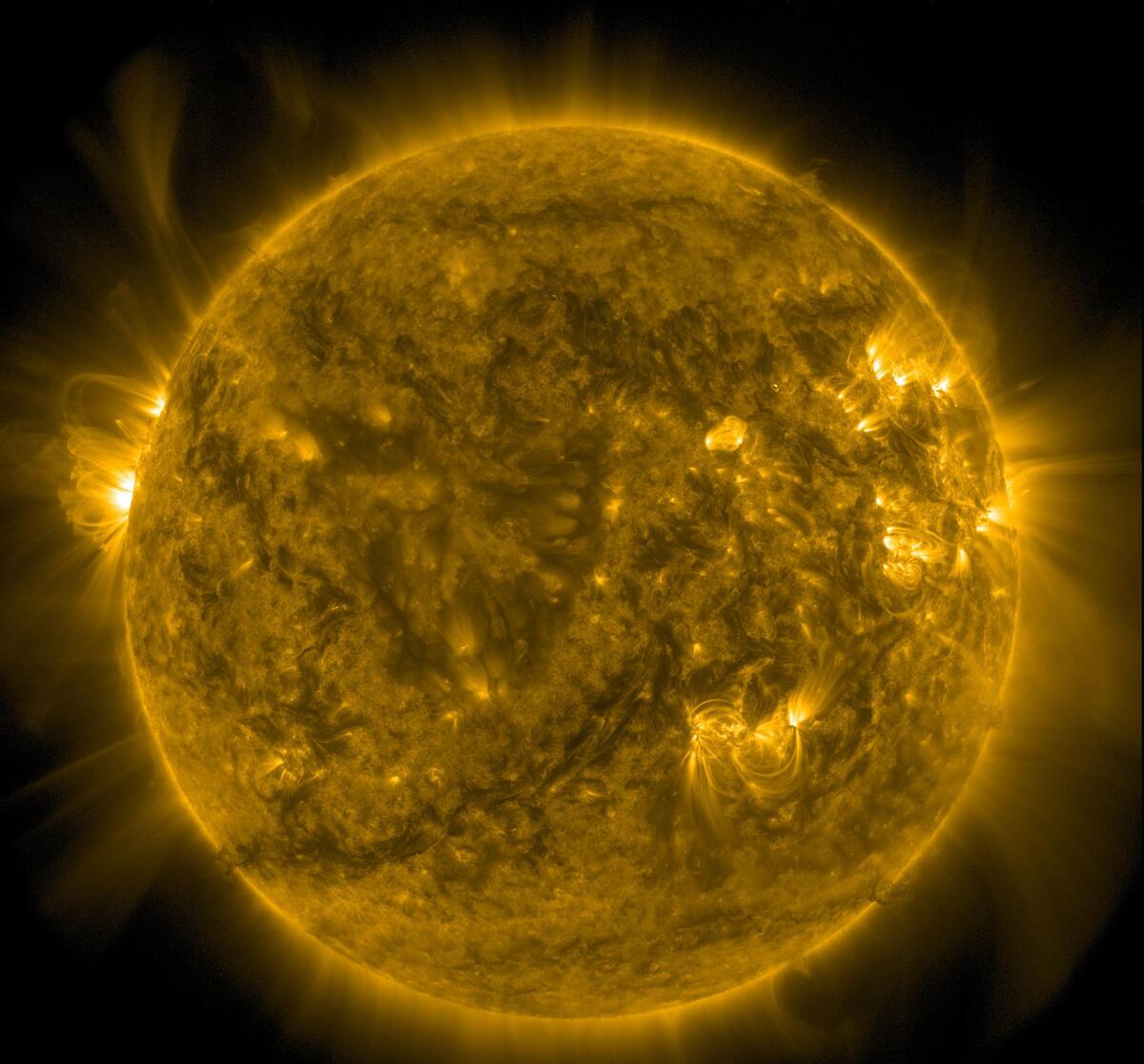
The Sun is our nearest star and the easiest to study, but it is also the only object in the sky that can permanently damage your eyes. Looking at it without proper protection, even briefly, can burn the retina. This damage, called solar retinopathy, is painless, so you may not notice until it is too late.
Safe ways to look
- Eclipse glasses or hand-held solar viewers that meet the international standard ISO 12312-2. Buy from a reputable supplier, and check them before use: throw them away if they are scratched, punctured or torn.
- Welding filters of shade 13 or 14. Shade 14 is darker; shade 12 or lower is not safe.
- Projection: make a pinhole in card and let sunlight fall through it onto paper a metre away. Or look at the dappled shadows under a tree during an eclipse: each gap between the leaves acts as a pinhole.
- Telescopes and binoculars only with a proper solar filter fitted securely over the front of the instrument, covering the full aperture.
Not safe
- Ordinary sunglasses, even very dark ones, or several pairs stacked together.
- Smoked glass, exposed film, CDs, or X-ray films.
- Auto-darkening welding helmets: many do not go dark enough, and even those that do can fail.
- Looking through binoculars, a telescope or a camera viewfinder without a front filter: they concentrate sunlight and can blind you instantly, even while wearing eclipse glasses.
What you can see
With a safe filter you can watch sunspots: cooler, darker regions caused by the Sun's magnetic field. Their number rises and falls in a cycle of about 11 years. The current cycle reached its maximum around 2024–2025, and strong solar activity brought auroras far closer to the equator than usual.
The Sun is about 109 times the diameter of Earth. Its visible surface, the photosphere, is about 5,800 kelvin (around 5,500 °C).
Sources
Part of the course Observing from Zimbabwe.