
Research skills, 2 minute read
Exoplanets: Worlds Around Other Stars
More than 6,000 planets have been confirmed around other stars. Learn how astronomers find planets they cannot see, what kinds of worlds exist, and the search for life.
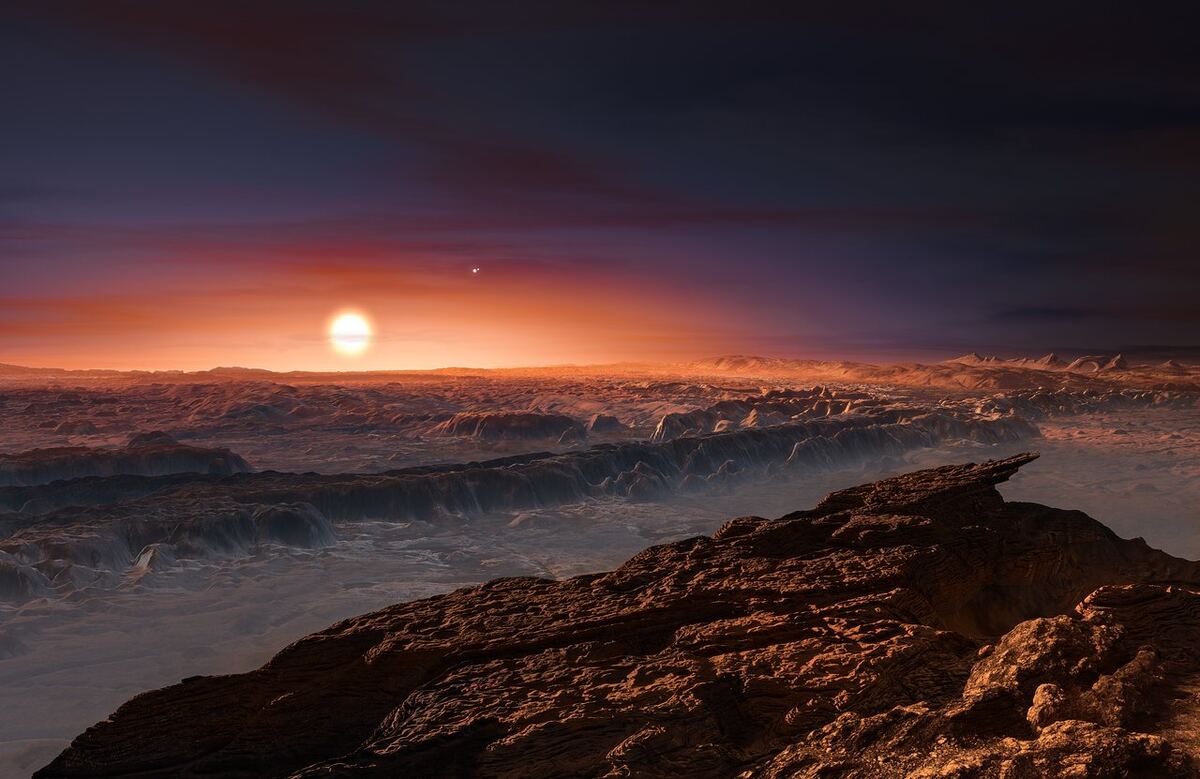
For most of history, nobody knew whether other stars had planets. Today we know they are everywhere. In September 2025 NASA announced that the number of confirmed exoplanets, planets orbiting other stars, had passed 6,000, with thousands more candidates awaiting confirmation.
The first discoveries
- In 1992, Aleksander Wolszczan and Dale Frail found planets around a pulsar, the collapsed remnant of a dead star.
- In 1995, Michel Mayor and Didier Queloz found 51 Pegasi b, the first planet around an ordinary Sun-like star: a giant planet orbiting its star in just four days. They shared the 2019 Nobel Prize in Physics.
How to find a planet you cannot see
Planets are faint and lost in the glare of their stars, so most are found indirectly:
- Transits. If a planet passes in front of its star, the star dims slightly at regular intervals. The amount of dimming gives the planet's size. NASA's Kepler mission (2009–2018) and TESS (launched 2018) have found thousands this way; transits account for most known exoplanets.
- Radial velocity (the wobble method). A planet's gravity makes its star wobble. The star's light shifts slightly redder and bluer as it moves, revealing the planet and its mass.
- Direct imaging. Blocking the star's light lets large telescopes photograph some young, giant planets far from their stars.
- Microlensing. A star with a planet passing in front of a more distant star briefly bends and magnifies its light.
A zoo of worlds
Many exoplanets are nothing like those in our Solar System: hot Jupiters orbiting their stars in days, super-Earths and mini-Neptunes larger than Earth but smaller than Neptune, and worlds that may be covered in deep oceans. The TRAPPIST-1 system, 40 light-years away, has seven Earth-sized planets. The nearest known exoplanet, Proxima Centauri b, orbits the closest star to the Sun, a small red companion of Alpha Centauri, the Pointer star you can see from Zimbabwe.
Looking for life
Astronomers look for planets in the habitable zone: the range of distances from a star where liquid water could exist on the surface. The James Webb Space Telescope can now study light passing through the atmospheres of some exoplanets during transits and identify gases such as water vapour and carbon dioxide. Finding convincing signs of life would need many independent lines of evidence. No such signs have been confirmed.
Sources
Part of the course Astronomy Research Methods.