
Space science, 2 minute read
Galaxies and the Expanding Universe
Our galaxy is one of hundreds of billions. Learn how astronomers discovered other galaxies, why their light shows the Universe is expanding, and what we still do not understand.
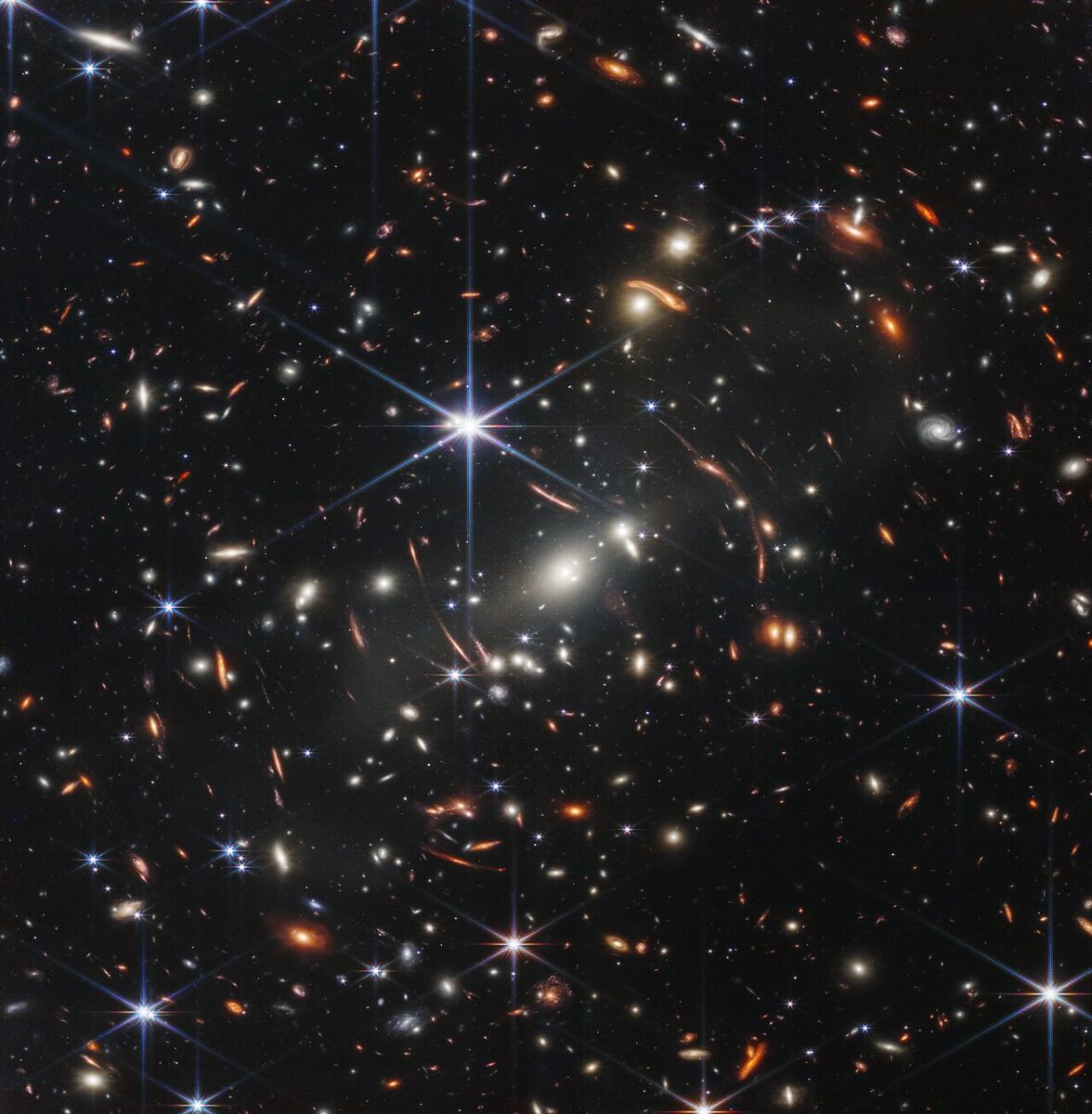
A hundred years ago, many astronomers thought the Milky Way was the whole Universe. The fuzzy spirals seen in telescopes were thought to be clouds inside it. That changed in the 1920s, and our picture of the cosmos has never been the same.
Island universes
In 1924 Edwin Hubble found Cepheid variable stars in the Andromeda "nebula". These stars pulse with a period that reveals their true brightness, so they act as measuring sticks. They showed that Andromeda is far beyond the Milky Way: a separate galaxy. Today we estimate there are hundreds of billions of galaxies in the observable Universe.
Kinds of galaxy
- Spiral galaxies, like the Milky Way and Andromeda, have a flat disc with spiral arms full of young stars and gas.
- Elliptical galaxies are smooth, round or oval collections of mostly old stars.
- Irregular galaxies have no clear shape. The Large and Small Magellanic Clouds, easy to see from Zimbabwe, are irregular galaxies orbiting our own.
The Universe is expanding
The light from distant galaxies is shifted towards the red end of the spectrum: a redshift. In 1927 Georges Lemaître, and in 1929 Hubble, showed that the farther away a galaxy is, the faster it is moving away from us. In 2018 the International Astronomical Union recommended calling this the Hubble–Lemaître law.
This does not mean we are at the centre. Space itself is stretching, so every galaxy sees the others moving away, like raisins in rising bread. The rate of expansion is the Hubble constant, roughly 70 km/s per megaparsec: a galaxy 10 megaparsecs (about 33 million light-years) away recedes at about 700 km/s.
The Big Bang
Run the expansion backwards and everything was once extremely hot and dense. This is the Big Bang, about 13.8 billion years ago. Its afterglow, the cosmic microwave background, was discovered by accident in 1965 and fills the whole sky.
Open questions
- Dark matter: galaxies spin too fast to be held together by the matter we can see. Some unseen matter, about five times as much as ordinary matter, must be there.
- Dark energy: in 1998 astronomers found that the expansion is speeding up. What drives it is unknown.
- The Hubble tension: measurements from the early Universe give a Hubble constant near 67, while measurements from nearby stars and supernovae give about 73. Nobody yet knows why they disagree. It is one of the most active research questions in astronomy today.
Sources
Part of the course Stars, Galaxies and the Universe.