
Solar System, 2 minute read
Planets You Can See Without a Telescope
Five planets are easy to see with your eyes alone. Learn how to tell a planet from a star, where to look, and what binoculars will show you.
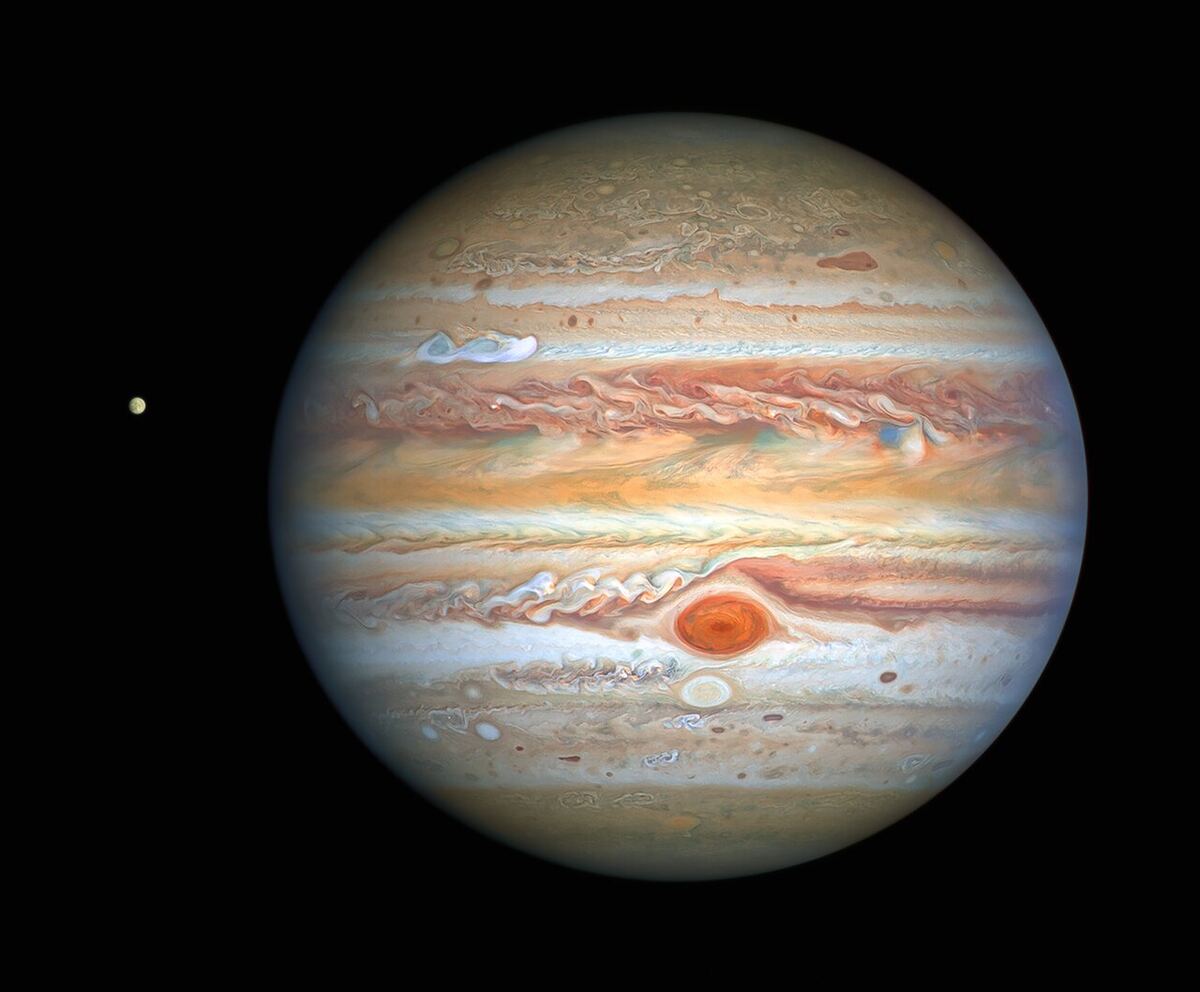
Long before telescopes, people noticed five bright "stars" that wandered slowly against the fixed patterns of the sky. The Greek word for wanderer, planetes, gave us the word planet. These five are Mercury, Venus, Mars, Jupiter and Saturn.
Planet or star?
- Planets stay close to the ecliptic, the path the Sun and Moon follow across the sky. If a bright "star" sits along the line joining the Moon and where the Sun set, it is probably a planet.
- Stars twinkle strongly, especially low down. Planets usually shine with a steadier light, because they appear as tiny discs rather than points.
- Planets move against the stars from week to week.
The five naked-eye planets
- Venus is the brightest object in the night sky after the Moon. It is never far from the Sun, so it is only seen in the west after sunset (the "evening star") or in the east before dawn (the "morning star"). Many cultures, including peoples of southern Africa, gave the morning and evening appearances different names.
- Mercury is also always close to the Sun and is seen low in the twilight for a few weeks at a time. It is the hardest of the five to catch.
- Mars has a clear orange-red colour. It is brightest around opposition, when Earth passes between Mars and the Sun, which happens about every 26 months.
- Jupiter is very bright and creamy white. Steady binoculars show up to four of its largest moons as tiny points of light in a line: the same moons Galileo discovered in 1610.
- Saturn looks like a steady yellowish star. You need a small telescope to see its rings, but they are one of the finest sights in astronomy.
Where are they tonight?
The planets' positions change through the year. The ZAS app's Sky section and NASA's monthly "What's Up" skywatching guide tell you which planets are visible and when. Uranus and Neptune are too faint to find without a chart and binoculars or a telescope.
Sources
Part of the course Astronomy Foundations.